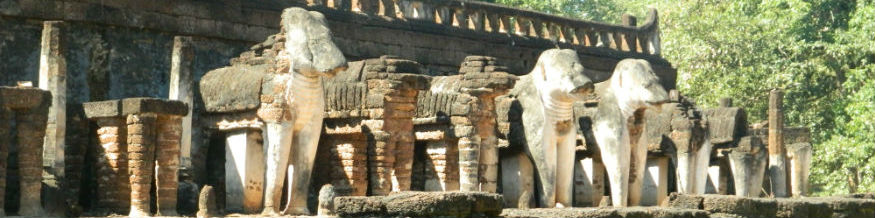

Sawankhalok departure...... At this stage my original plan for this tour seems to have gone out the window. If 'Chiang Rai' is to be the name of this tour then I'd better get a move on but I can’t. I'm likely to struggle to get everything I'd like to get done today in Si Satchanalai Historical Park. At least I don't have to worry too much about my blog but I'm looking forward to that breakfast again. When all is packed and ready it's around 9.30 am. It's then about 30 minutes to the park from Sawankhalok and we take the back road to get a good view of the Yom River. However one issue may affect the day. For the second day running there's wall-to-wall sunshine. The heat is not unbearable but the day will be a long one.
Si Satchanalai Historic Park - inner temples...... As a warm-up, two temples appear just outside the visitor centre as we arrive. Then at the centre it's a question of orientation and securing more maps to establish just how big that task I face actually is. There seems to be no official version but I select the one that shows temples outside the old city wall as well as inside. However this map lists a whopping 42 sites. How I'm going to deal with these I'm not sure. Really I have to start with the temples inside the old walls as these are clearly the most important. One issue immediately is that no motorised vehicles are allowed inside the old city. I can either walk or hire a bicycle. The length of the city wall is about 1 kilometre but having done a recce I realise that to visit all the temples could add up to 4 or even 5 kilometres. I double back to get two wheels; much better! But as at Sukhothai the larger temples take time to record and photograph.
Four major temples push the time towards midday. Then at the far end there are two more temples, both having steps to reach the mound on which they is situated with connecting pathways between the two. An additional attraction is the largest colony of storks I've ever seen creating riot high in the tree tops such that you would think there is a huge waterfall nearby. These and a few minor temples take the time to well past 1.00 pm. It's time to head back to the entrance for lunch.
Getting to terms
Viharn, Vihara, Wihan... an assembly hall where followers come to pray and make offerings.
Ubosot, Ubosotha... a hall for the ordination of monks.
Mondrop, Mandapa... an enclosed building, normally for a Buddha image.
Prang... a tall tower-like spire, usually richly carved, a common shrine element of Hindu and Buddhist architecture in the Khmer Empire. They were later adapted by Buddhist builders in Thailand, especially during the Ayutthaya Kingdom (1350-1767) and Rattanakosin Kingdom (1782-1932).
Sites in or near the old city wall
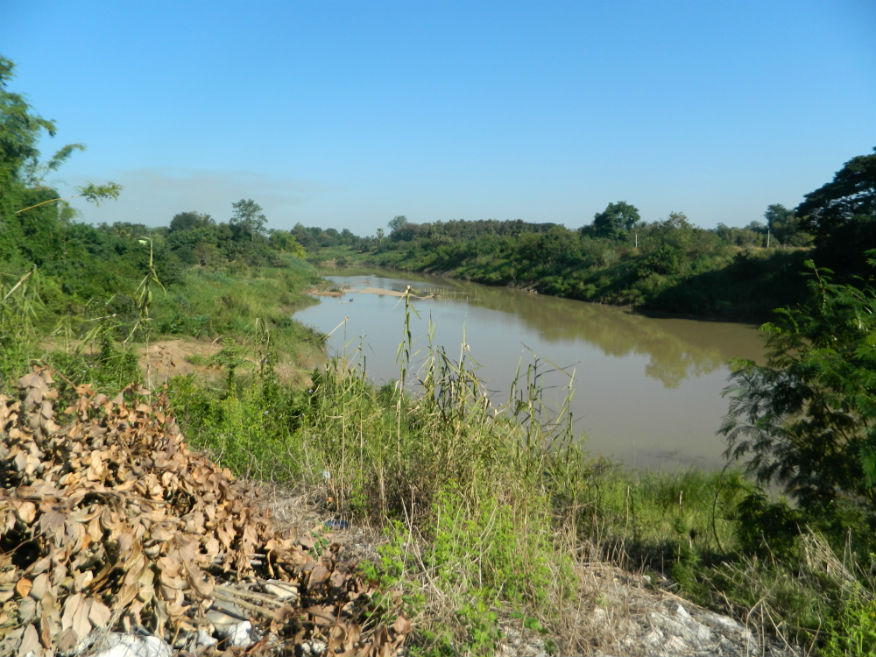
Yom River...... The Yom River is the main tributary of the Nan River (which itself is a tributary of the Chao Phraya River). The Yom River has its source in the Phi Pan Nam Range in Pong district, Phayao Province, Thailand. Leaving Phayao, it flows through Phrae and Sukhothai as the main water resource of both provinces before it joins the Nan River at Chum Saeng district, Nakhon Sawan Province.
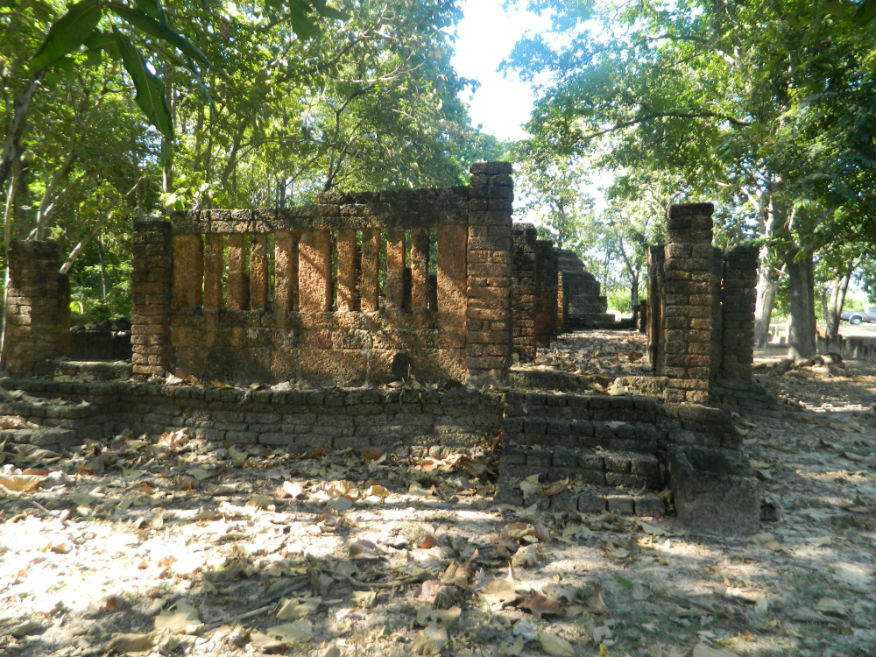
Wat Pa Krasa...... Wat Pa Krasa lies opposite to Wat Thung Setthi located near the park entrance. It consists of a base for a bell-shaped chedi and a viharn with glassless windows similar to those found at Wat Nang Phraya. The boundary wall in laterite has four entrances. It is assumed that the roof was repaired as baked clay tiles were found stacked near the wall.
Wat Thung Setthi...... Situated outside the southwest city wall near the Ramnarong Gate (the main entrance to the park), Wat Thung Setthi faces northeast. This important ruin consists of a viharn which had six rooms and a terrace in front, a principle chedi on a square base and several smaller chedis in alignment to the rear and left of the main chedi.
Ramnarong Gate...... The Ramnarong Gate is the main gate and park entrance. It is mainly intact, built of laterite some 3.5 metres wide by 4 metres high. It lies in line with the southeast town wall. The piers are recessed to accept a substantial wooden door. Outside the city wall there is moat with a walkway built in laterite blocks leading to the gate. The gate and the fortifications date back to before 1474.
Wat Nang Phaya...... Wat Nang Phaya was built in the early Ayutthaya Period, 16th Century. This is a large monastery located on the main axis of the town. This shows its importance, yet it doesn't appear in the chronicles. The temple consists of the main chedi with a round spire with an arch on each side. This chedi resembles Wat Phra Si Sanphet in Ayutthaya. The viharn has seven rooms built in laterite with limestone plaster. Stucco reliefs indicate Chinese and Lanna influence.
Wat Lak Muang...... Wat Lak Muang lies inside the town near the Royal Palace, facing southeast. In the temple grounds lies a viharn which is connected to a small mondrop. Behind the mondrop is a chedi with 20 indented corners, indicative of Khmer art. The name Lak Muang means 'town post', more often referred to as city pillar.
Wat Suan Kaeo Utthayan Yai...... Wat Suan Kaeo Utthayan Yai lies inside the city located along the main axis of Si Satchanalai town. It is a large monastery appearing in two parts of the Northern Historic Chronicles. The temple is rectangular facing southeast. The ruin of the circular chedi has just a set of pedestals. The viharn has six rooms without partitions and the pedestal for the Buddha image and remains of the monk's seat.
Wat Chedi Ched Thaeo...... Wat Chedi Ched Thaeo is an important temple located inside the town wall. There are situated, 33 chedis in various styles representing cosmology. It has been suggested that this is a graveyard for the Sukhothai dynasty. The chedis are of three types: lotus bud shaped, prasat style and round style.
Wat Chang Lom...... Wat Chang Lom was built in the Sukhothai Period, 14th Century. It is a large Buddhist temple located in the centre of the city. One possible date for its construction is 1285. Stone inscription No. 1 states that King Ramkhamheang dug up the Buddha's relics in order to pay homage then consecrated them under the new temple. The chedi shows Sri Lankan influence with a tall square base around which are 39 elephant sculptures.
Wat Suan Kaeo Utthayan Noi...... Wat Suan Kaeo Utthayan Noi is located close to the area suggested being the palace of Si Satchanalai and could have been the royal temple. The temple faces southeast and has two gates on opposite sides. The monuments display a distinctive Sukhothai style with a combination of Khmer and Sri Lankan art such as chedis of lotus-bud or Sukhothai prasat styles. In the ubosot there is a mondrop containing the remains of seated Buddha. The wooden core construction is indicative of early Sukhothai design.
Wat Khao Phanom Phloeng...... Wat Khao Phanom Phloeng is located on top of Phanom Phloeng Hill overlooking the city. It is mentioned in the Northern Historical Chronicle that a hermit named Satchanalai advised the local leader, Ba Thammatat that he must choose a location of his town near the temple a place for fire ceremonies.
To reach the temple there is a staircase build in laterite with 144 steps (I counted about 120). The important buildings are the main rounded chedi, an ubosot and a mondrop which is a shrine to a goddess revered by local people.
Wat Khao Suwankhiri...... Wat Khao Suwankhiri is located lies on a hill near the center of the town and is adjacent to Wat Khao Phanom Phloem. The important structure here is the main chedi which has its base five levels high. Some parts of the chedi are decorated with bas-relief stuccoes of the walking Buddha. The chedi is built in the same style as the one at Wat Chang Lom which is of the same period, 14th Century. To the east of the main chedi is the ubosot surrounded by other buildings and subordinate chedis lying to the west of the main stupa.
Wat Som Siao - Monument 17...... Wat Som Siao is a minor temple in the old city facing northeast. It consists of a base for a viharn with balconies in the front and back built in laterite. The principal chedi lies behind consisting of a square base with a rectangular altar also made of laterite. The temple dates from 14th-15th Century.
Wat Pa Makham - Monument 14...... Wat Pa Makham faces east consisting of a main chedi, a viharn and subordinate chedis all built in laterite. The main chedi is thought to have been bell-shaped situated on top of a square base. The lowest remaining base is at the third level. The base is a chamfer-angle design with upturned and overturned lotus style. The viharn had five rooms with a base of overturned lotus design. The subordinate chedi seems to have had multiple spires.
Wat Na Phaeng - Monument 18...... Wat Na Phaeng, facing east consists of a viharn with five rooms. The laterite base also supports a mondrop with arched entrance likely to be of rose petal design. A similar arched entrance is at Wat Phaya Dam. The chedi was supported on a square base made of laterite. The design is 14th-15th Century Sukhothai Period.
Saphan Chan Gate - Monument 32...... The Saphan Chan Gate is at the base of Suwankhiri Mountain to the south. The gate is 2.5 metres wide by 2.7 metres high. The fortification follows the line of natural stone with a rectangular base 12 x 25 metres. Outside the wall are two sets of earthworks divided by a moat. Historically, according to the Ayutthaya Chronicle, King Naresuan moved his troops here during a war with the Burmese and it is referred to in a literary by King Rama VI. The gate was built sometime before 1474.
Wat Sa Yakha - Monument 22...... Wat Sa Yakha faces east and is located inside the city near the junction with the south and west corner of the city wall where there is a pond. The viharn in laterite had five rooms with a monk's shrine to the right of the Buddha Image. The principal chedi is located behind the viharn on a square base of budding lotus design while a balcony stretched out in front. Two subordinate chedis to left and right are made from laterite.
Wat Vihan Noi - Monument 23...... Wat Vihan Noi faces northeast and it constructed of laterite. It consists of a viharn which had three rooms built on a base of upturned lotus. Behind the viharn is a mondrop. It is presumed that this had an arched roof similar to other structures found inside the city. To the rear of the mondrop is a square base for a subordinate chedi. This temple is of Sukhothai Period, 14th-15th Century.
Sites outside the old city wall, north
Wat Kudi Rai...... Wat Kudi Rai is located alongside the Yom River to the north, outside Si Satchanalai town wall, facing south to the Tao Mor Gate. The viharn has a mondrop to the rear enshrining a Buddha image while at the rear of the ubosot, is a similar mondrop and image. There are also three lotus-shaped chedis and one round one behind the mondrop.
Sangkhalok Kiln Preservation Centre...... The Sangkhalok Kiln Preservation Centre is located a few kilometres north from the Tao Mor Gate following the Yom River to the north. The centre has a useful collection of Sangkhalok wares as well as a preserved excavation pit. The exhibits represent the high quality ceramics that were produced in the area from the 13th Century right through to the end of the Ayutthaya Period in 1767.
Museum for kilns 42 and 123...... The Museum for kilns 42 and 123 is situated in Ban Ko Noi some 5 kilometres north from the Tao Mor Gate. The museum concentrates on the work of excavating the numerous Thuriang kiln sites in the area. The group of kilns No. 42 has received particular attention and much has been learnt about the development of ancient ceramics technology of Si Satchanalai. 19 kilns have been studied falling into 2 groups, the earlier updraft type and the later higher quality cross draft type producing temperatures in excess of the 1,000 degrees necessary to produce high quality ceramics. Examples of production sites include in earlier underground kilns on top of which the later cross draft kilns were built.
Tao Mor Gate...... The Tao Mor Gate is the northern city gate of the old city of Si Satchanalai. It is a well constructed with fortifications built in laterite of similar proportions to the other gates.
For the record: Laterite
Wat Khok Singkharam...... Wat Khok Singkharam was constructed in the Sukhothai period with modifications carried out during the Ayutthaya Period. The temple lies within the walls of Chaliang, a town predating Si Satchanalai. The temple is walled on four sides with laterite blocks but the southern wall is shared with the Chaliang town wall. The viharn has walls with openings and decorated with stuccoes imitating wood carvings. The three rounded-style chedis are similar to those at Wat Phra Si Sanphet (Ayutthaya).
Wat Chao Chan...... Wat Chao Chan is an ancient temple from the 13th Century. The prasat or shrine is built of laterite blocks with lime plaster and is contemporary with Bayon (Khmer) architecture thus providing probably the most northerly Khmer influence. The prasat consists of three false doors while at the top are layers upon layers of lotus petals. During the Sukhothai Period a viharn was built in front of the shrine with a mondrop to the north indicating conversion to Theravada Buddhism in the reign of King Ramkhamhaeng.
Wat Chom Chuen...... Wat Chom Chuen is located in the old city of Chaliang on the banks of the Yom River about 400 metres east of Wat Phra Si Rattana Mahathat. Important buildings of the Sukhothai Period include the main chedi of Lankan style, a viharn and mondrop all constructed from laterite blocks. Excavations reveal that Wat Chom Chuen existed before the age of Sukhothai.
Wat Chom Chuen Archaeological Site Museum...... The Wat Chom Chuen Archaeological Site Museum is located next to Wat Chom Chuen. Excavations here have revealed 15 human burials at about 7-8 metres suggesting that the area around the temple was first occupied during the 3rd-4th century. Human habitation continued until at least the 6th-7th century. In the 11th century, two groups of large brick buildings appeared followed by the construction of the temple here.
Wat Phra Si Rattana Mahathat (Chaliang)...... Wat Phra Si Rattana Mahathat is a large historic temple complex located to the southeast of Si Satchanalai town. Decorative stuccoes bearing the Bayon style of ancient Khmer are found at the main entrance of the temple which together with archaeological evidence proves that this temple was founded before the Sukhothai period. Some evidence suggests it was constructed during the time of Pho Khun Sri Nao Nam Thom (1237). The temple consists of the following buildings: a) The main shrine... built of laterite blocks dated to the Ayutthaya period probably to cover an earlier building. Inside is a large Buddha image, Siharn Luang Pho To. b) Phra That Mutao... possibly a Mon style chedi built of laterite blocks of different date to the shrine. c) Mondrop of Phra Attarot... situated just behind Phra That Mutao. There might have been sculptures of Buddha on each exterior wall. d) Wiharn Phra Song Phi Nong... located to the left of the mondrop consisting of laterite blocks laid directly onto a brick base. e) Ubosoth... ordination hall in use located in front of the viharn and built on top an original one. f) Kui Phra Ruang Phra Lue... a building used by locals constructed at the same time as the ubosot.
Sites outside the old city wall, west/southwest
Monument w.5...... Monument w.5, located outside the city wall to the west, is a temple consisting of a Chedi, assumed to have been lotus-shaped, on a base with four levels. The rectangular viharn about 10 x 30 metres has front and rear porticoes. The site was cleared and excavated in 1992.
Monument w.4...... Monument w.4 located outside the city wall to the west, is a temple with a viharn built from laterite blocks and mortar. As there are traces of brickwork underneath it can be assumed this temple was built on top of another building at least twice. The round chedi at the rear of the viharn has a square base while three subordinate chedi exist along with a brick building of unknown origin. Surrounding the temple is a boundary wall built of laterite. This temple was excavated and restored in 1992.
Wat Rahu...... Wat Rahu is located outside the city wall to the west near the Saphan Chan Gate. The temple area faces east. The viharn is early Ayutthaya period style with a raised platform for monks and a pedestal for the Buddha image. The main chedi is lotus-bud shaped in Sukhothai style and is the largest in Si Satchanalai. There are five minor chedis; two lotus-bud shaped and three round-shaped. The name of the temple may be related to the style of stucco decoration.
Wat Phaya Dam...... Wat Phaya Dam built in the Sukhothai-Ayutthaya period lies outside Si Satchanalai city wall to the west. The viharn is at the front while the mondrop has an unusual arched roof in laterite. There are two image halls; the front one houses a seated Buddha image while the rear one houses a sanding image. To the rear of the temple grounds is an open hall which may have supported a reclining Buddha image. The remains of 41 minor chedis can be found.
Wat Sa Pathum...... Wat Sa Pathum is situated outside Si Satchanalai town to the west near Ramnarong Gate, facing east. The temple is rectangular surrounded by a moat. The viharn is at the front of the temple and has a portico while at the rear is a mondrop within which is seated a Buddha image. The chedi is distinctive in having a cylindrical base. A pathway seems to link the portico with the rear gate of Wt Phaya Dam.
Wat Yai Ta...... Wat Yai Ta is located outside the Si Satchanalai town wall near the Saphan Chan Gate. The most important structure on this site is the mondrop which is the highest and largest in Si Satchanalai. The seated Buddha image with only parts of the legs remaining would be the largest in the town. From evidence of stucco on the wall of the mondrop, similar to those on the wall of the viharn at Wat Nang Phaya, the temple is from the Ayutthaya period.
Wat Chedi Khao Yod...... Wat Chedi Khao Yod was constructed in the Ayutthaya period located on Khao Yai mountain ridge outside the town wall to the west. The temple was built onto the natural rock which had been levelled. To the front lies the viharn with a staircase leads to the main chedi which is shaped like a mondrop with twelve indented corners. The top of the chedi has eight smaller chedis at the corners and over niches. The chamber enshrines a seated Buddha image while on the walls are monochrome mural paintings of the same period as Wat Chedi Ched Thaeo.
Phra Ya Lithai Monument...... Phra Ya Lithai Monument. King Thammarja I (Li Thai) or Phraya Li Thai was the sixth king of the Phra Ruang dynasty. His father was King Lerthai, grandson of King Ramkhamhaeng. King Li Thai is best known for putting down a rebellion during a period of unrest in Sukhothai.
Phrae...... Around 5.00 pm we're heading north towards Si Satchanalai on Highway 101. It is a possible stop-over for tonight but with this tour already 2 days behind we decide to press on to the next province. There's still an hour's daylight left but the 101 continues north though a thickly forested mountainous area. The next major city is Phrae, 104 kilometres away. I calculate we could be in Phrae by 6.15 pm if all goes well but it will be dark as we arrive. Thankfully, traffic is light and there are no delays. However, we still have to locate accommodation. Something suitable comes recommended but Phrae is a big city and it takes time to locate it. Katoon spends time on the phone and finally we locate Palapol Place. Its recommendation proves effective and we find the rooms are more spacious than we've been used to. They tick all the usual boxes plus the apartments are close to shops and restaurants. When it comes to price, well I'll bite their hands off for 350 baht/night. We take a simple lunch on the pavement from a street vendor. My budget has received a huge boost today with very little outlay.
First Page.


Chaos at Wat Khao Suwankhiri


Si Satchanalai Historic Park


Yom River


Wat Pa Krasa


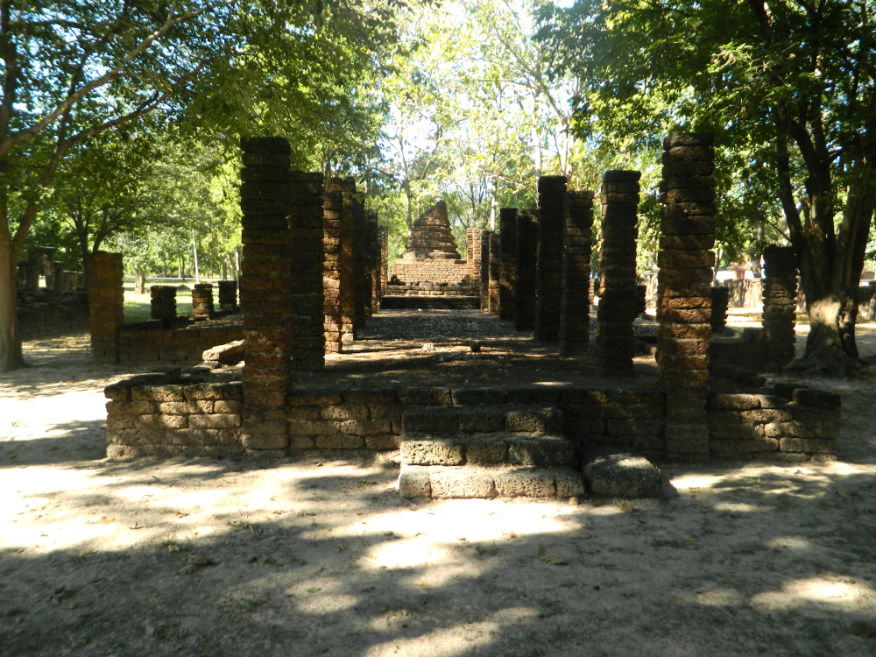


Wat Thung Setthi
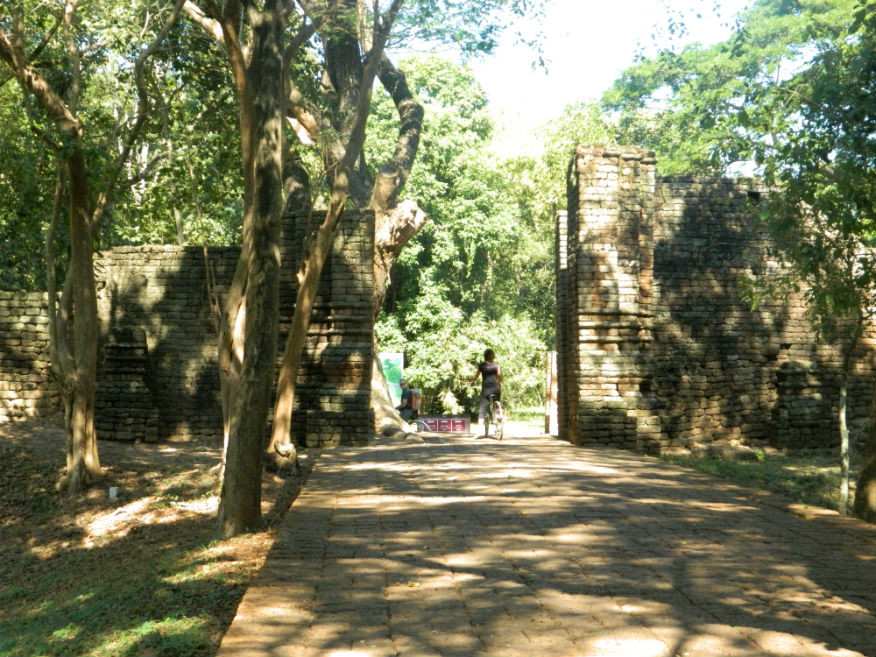


Ramnarong Gate

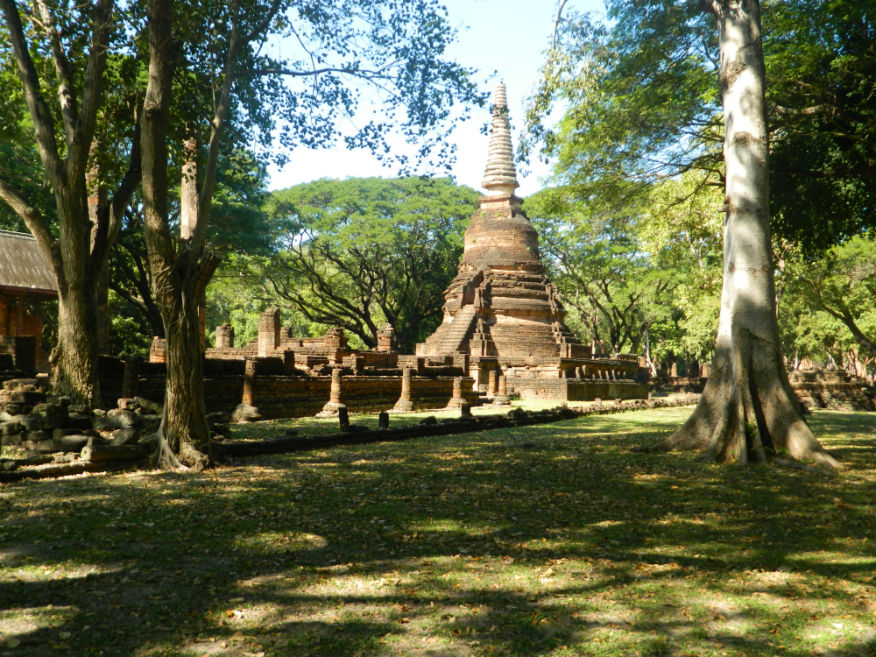


Wat Nang Phaya
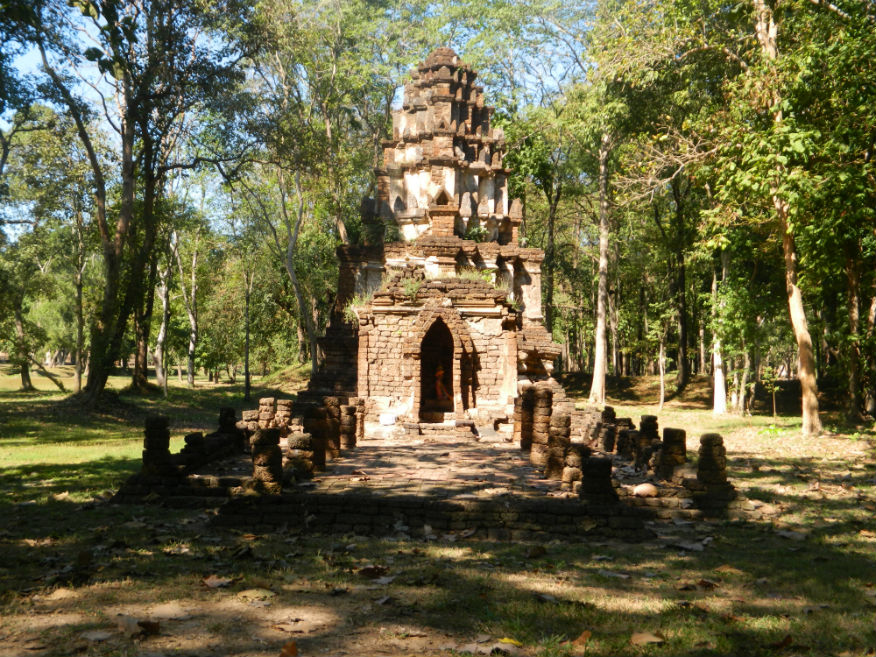


Wat Lak Muang

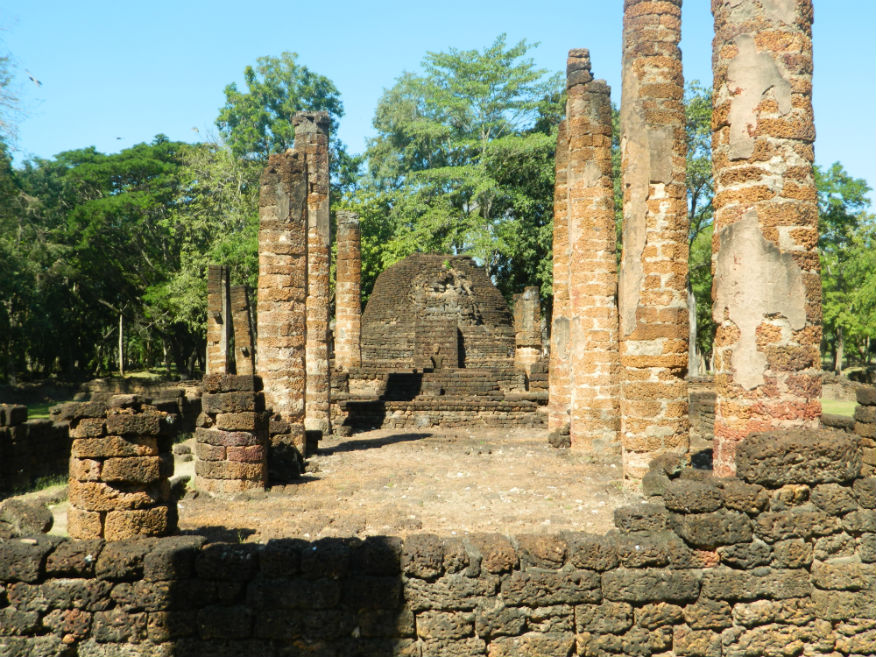

Wat Suan Kaeo Utthayan Yai
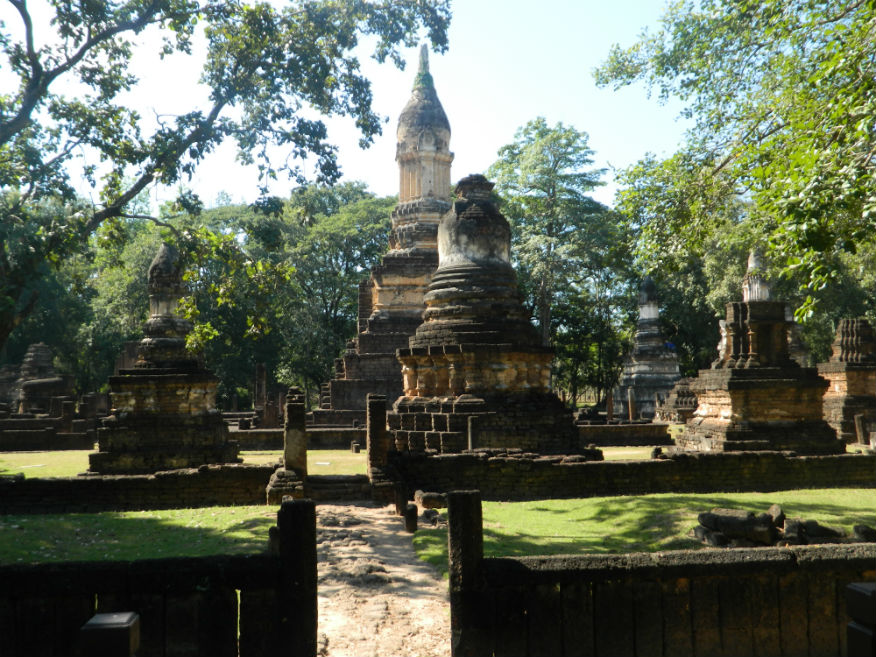


Wat Chedi Ched Thaeo

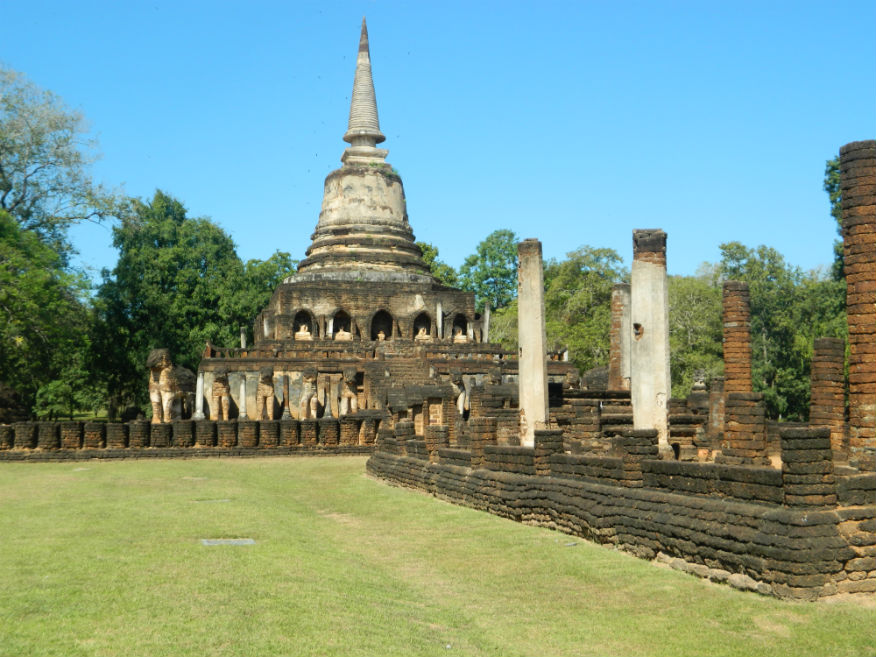


Wat Chang Lom

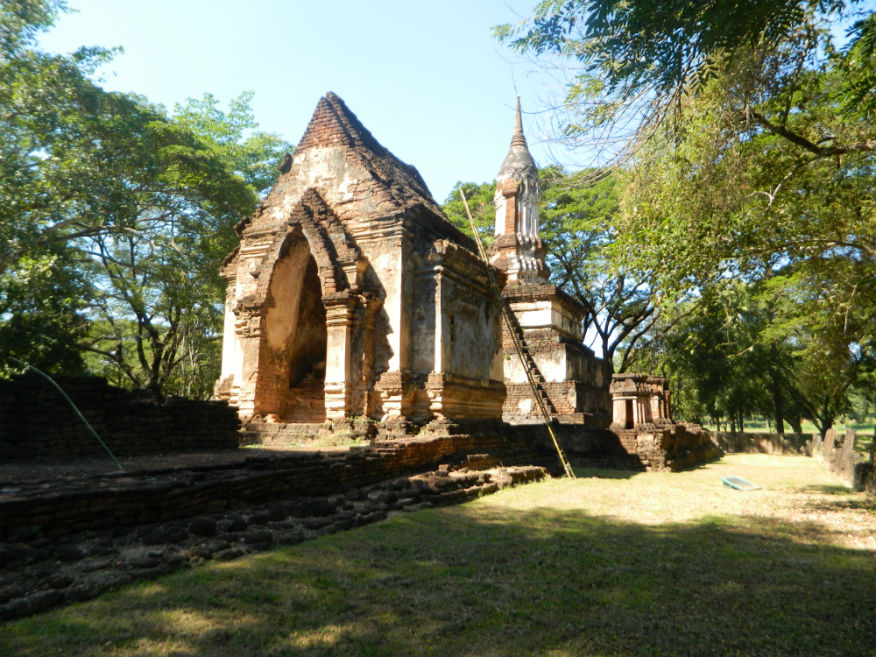

Wat Suan Kaeo Utthayan Noi

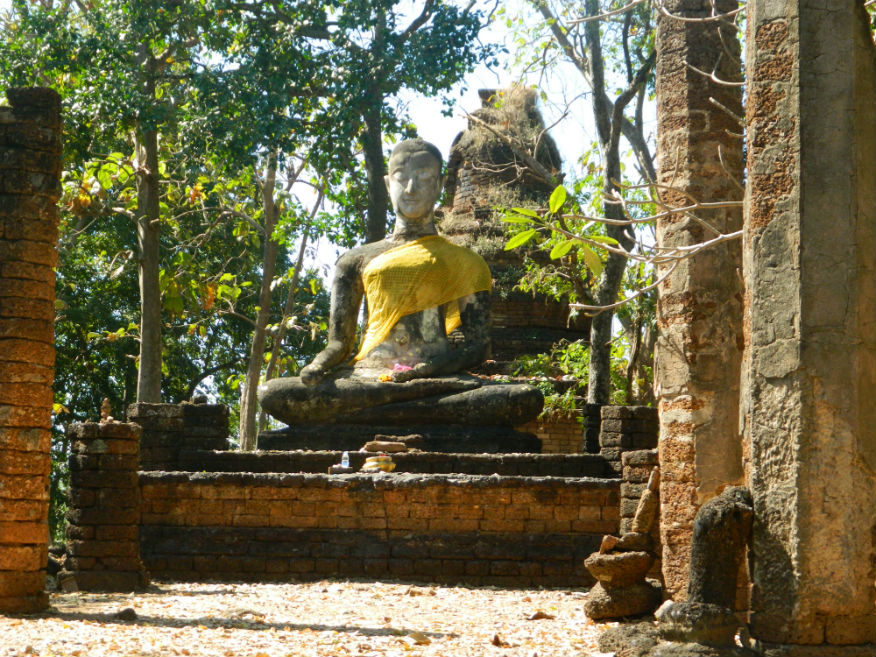

Wat Khao Phanom Phloeng


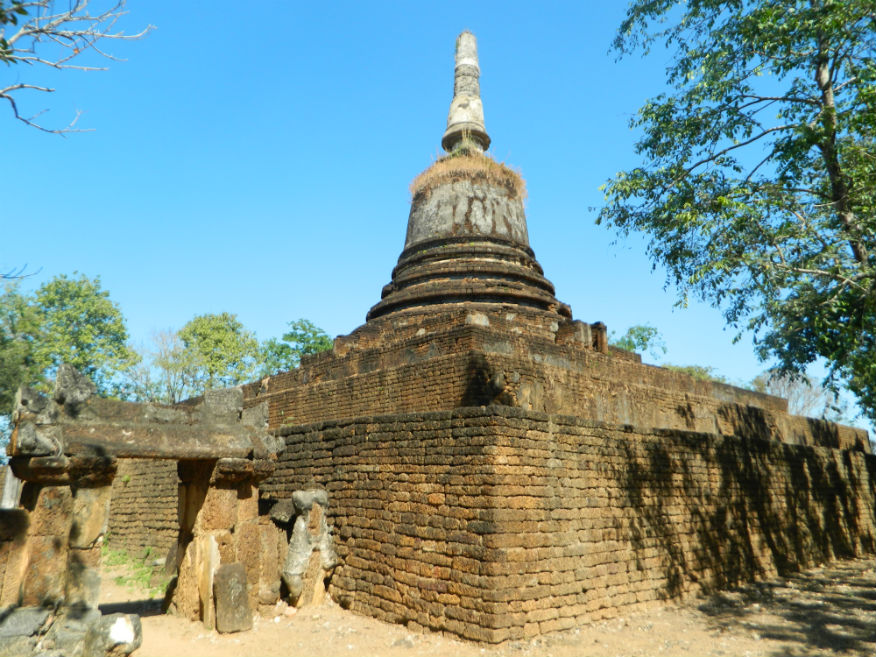


Wat Khao Suwankhiri
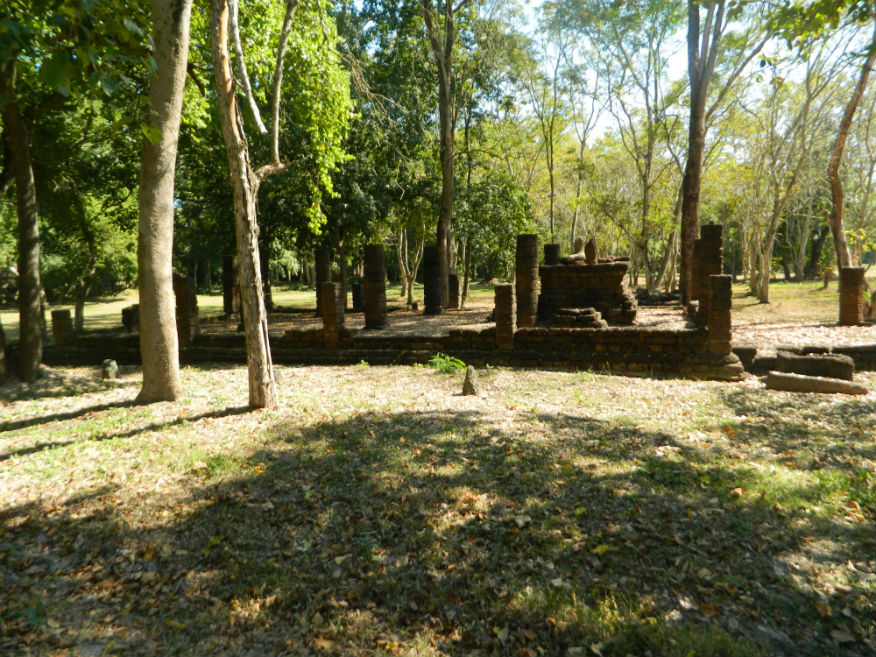
Wat Som Siao
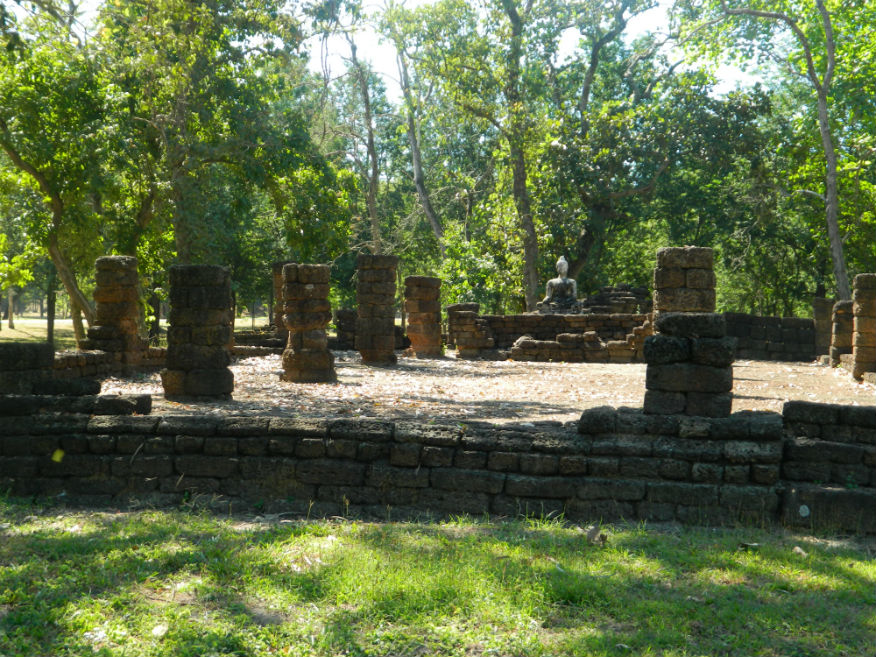
Wat Pa Makham
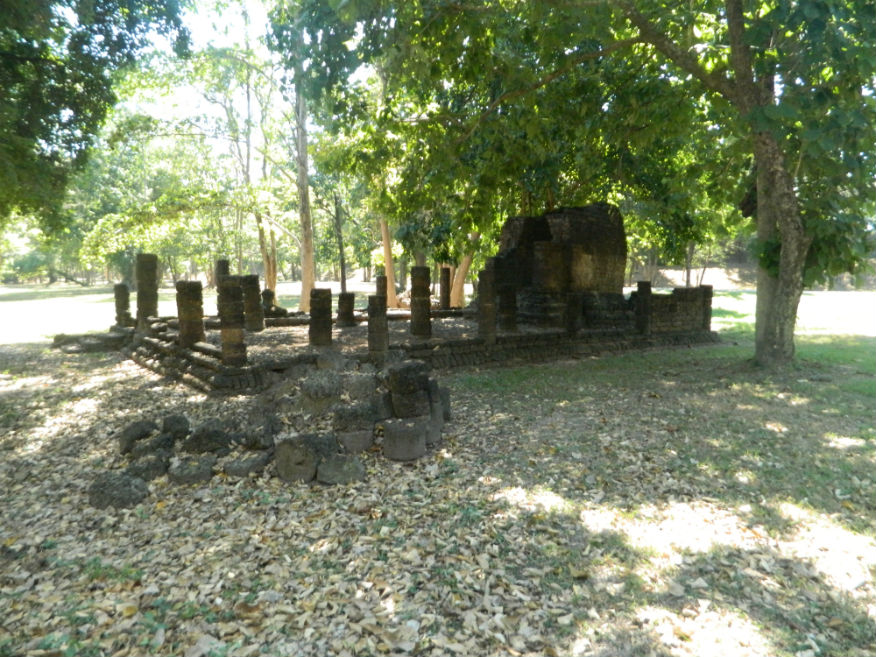
Wat Na Phaeng
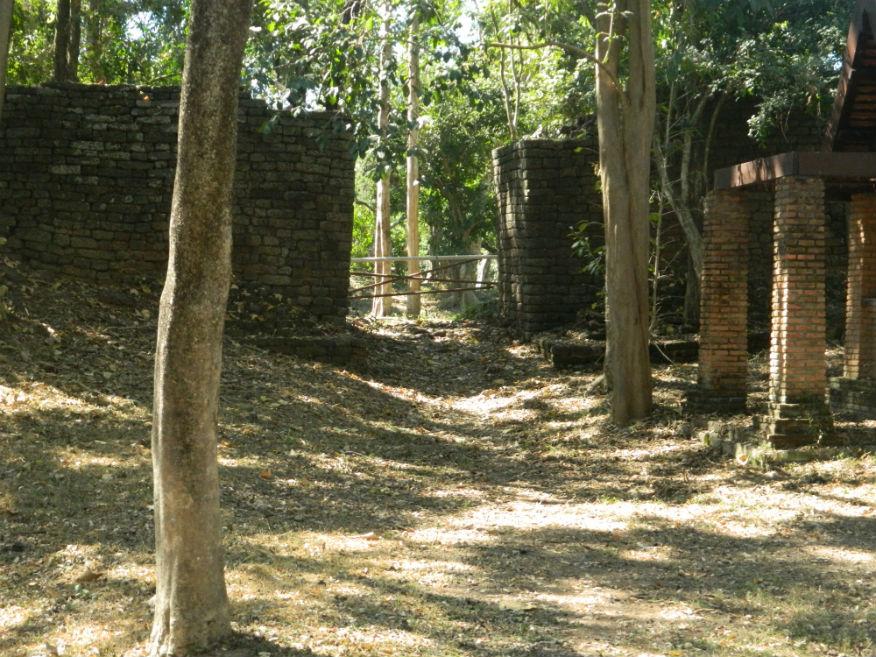
Saphan Chan Gate
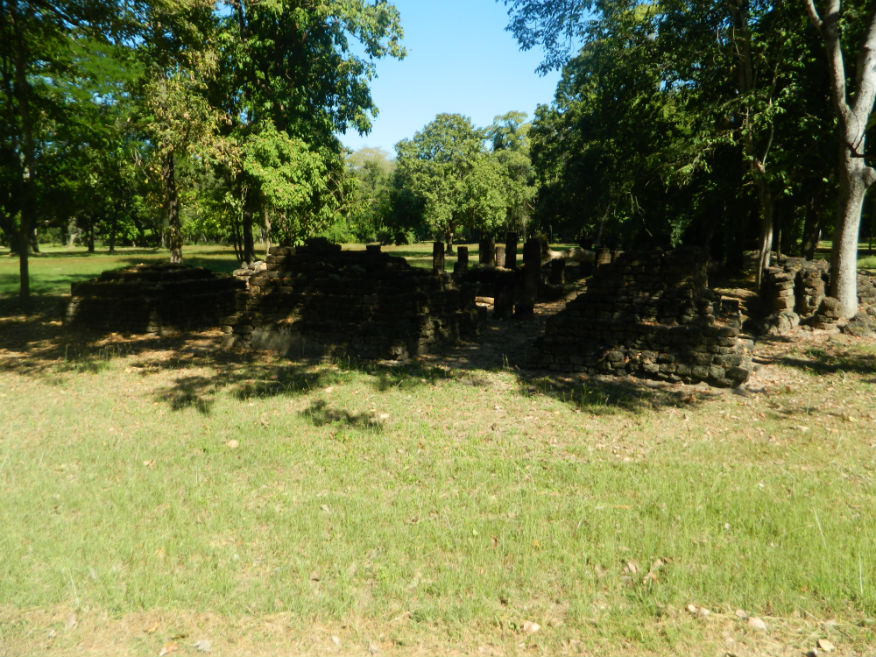
Wat Sa Yakha
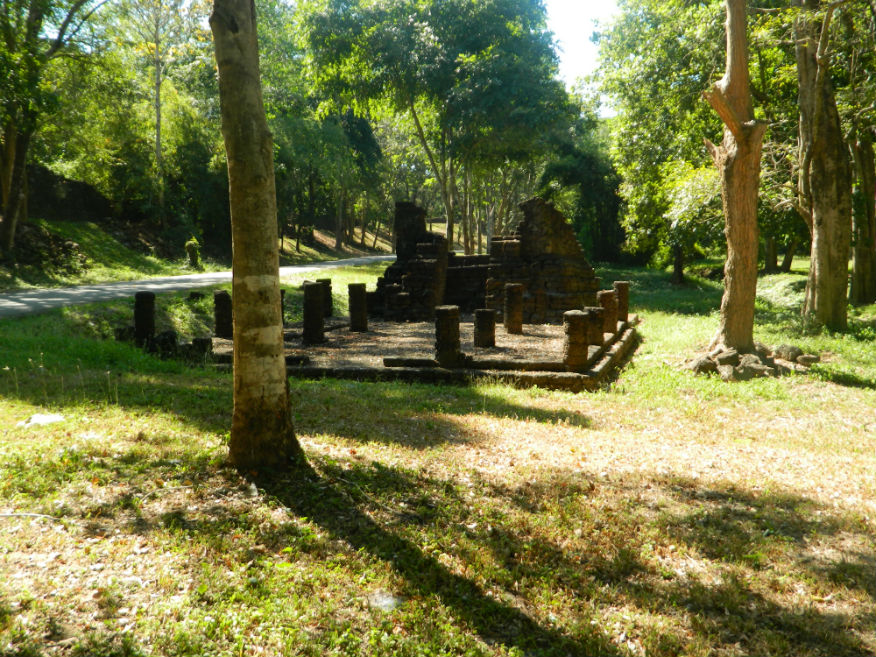
Wat Vihan Noi

Yom River
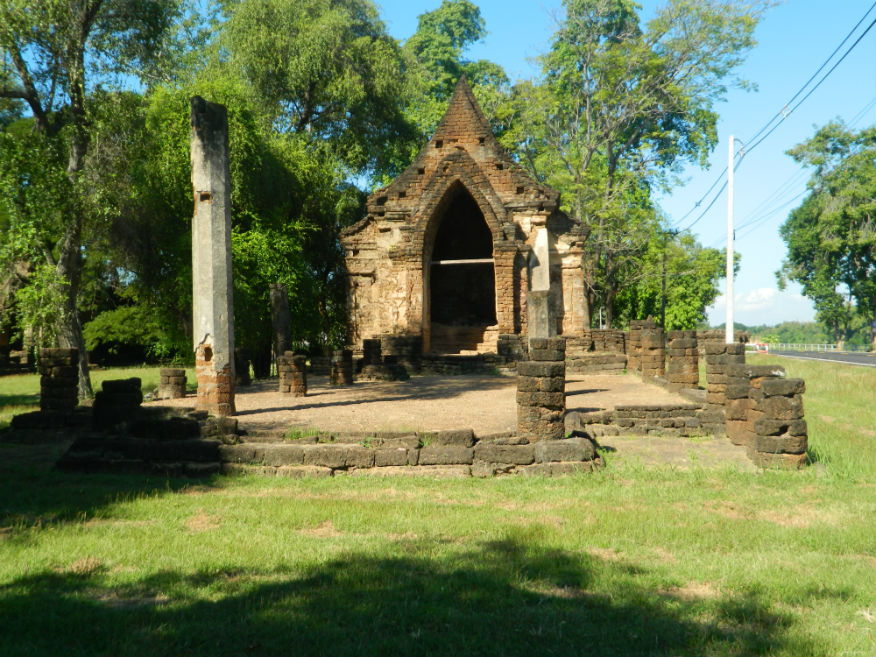

Wat Kudi Rai


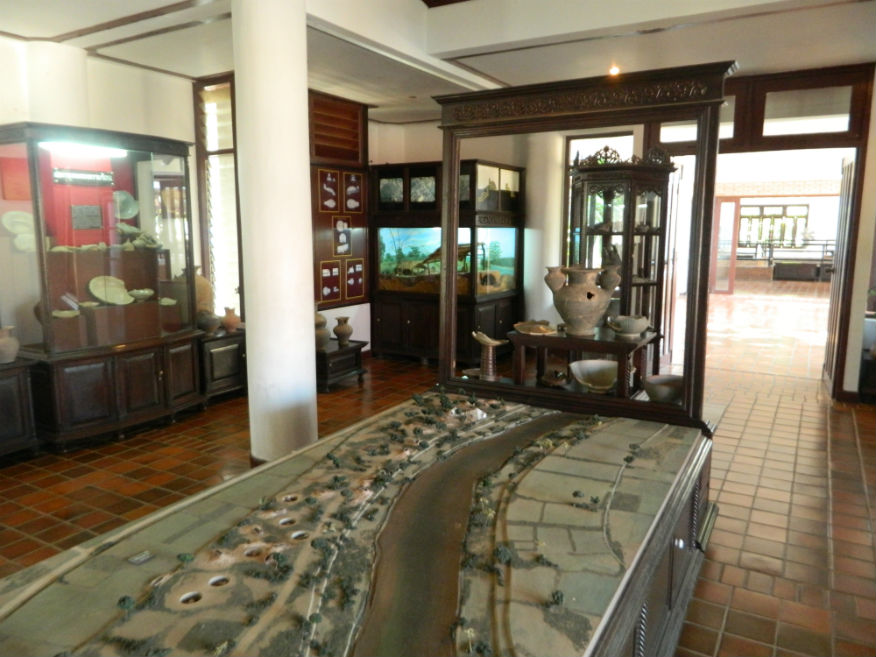

Sangkhalok Kiln Preservation Centre


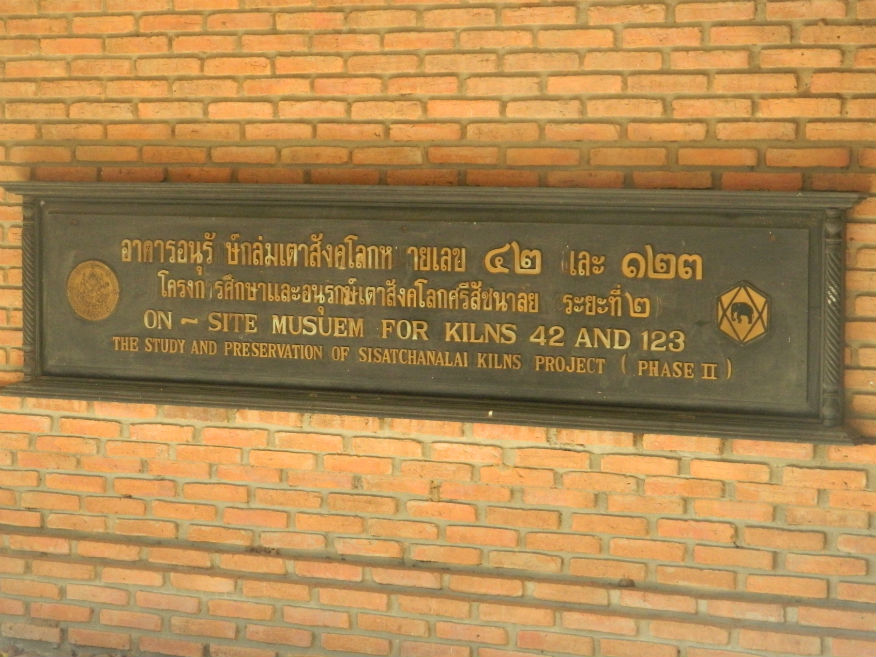


Museum for kilns 42 and 123
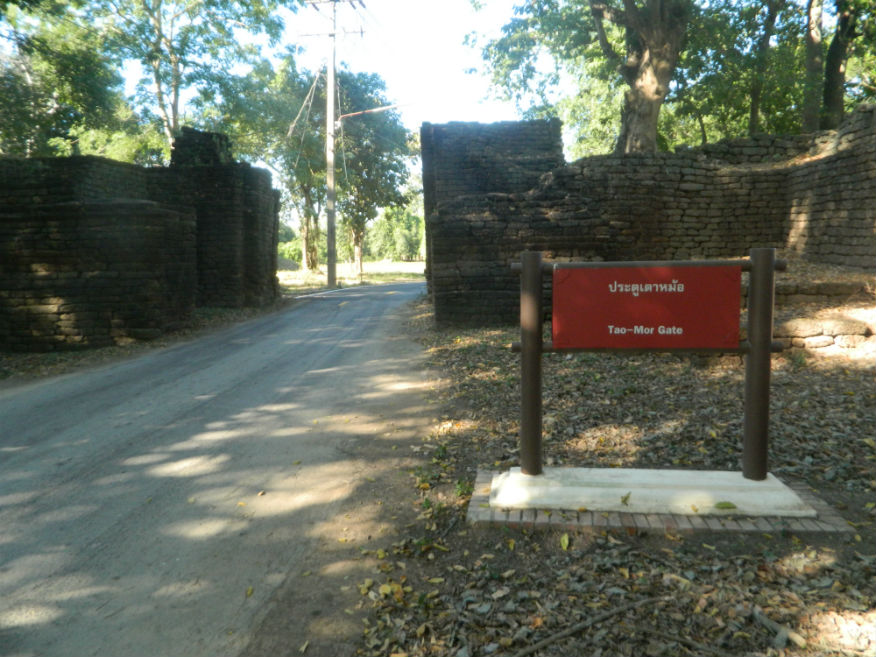


Tao Mor Gate and unidentified temple

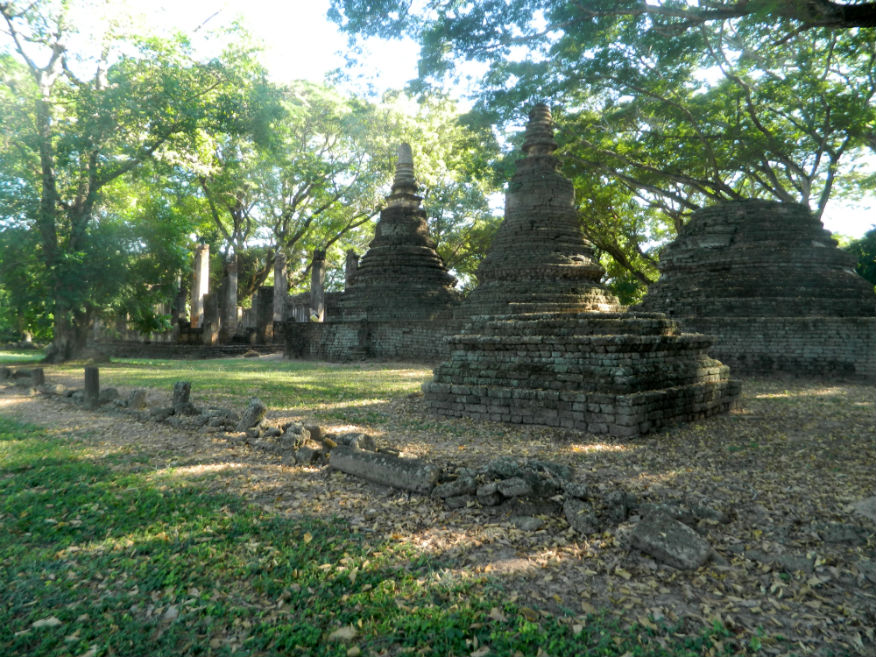


Wat Khok Singkharam


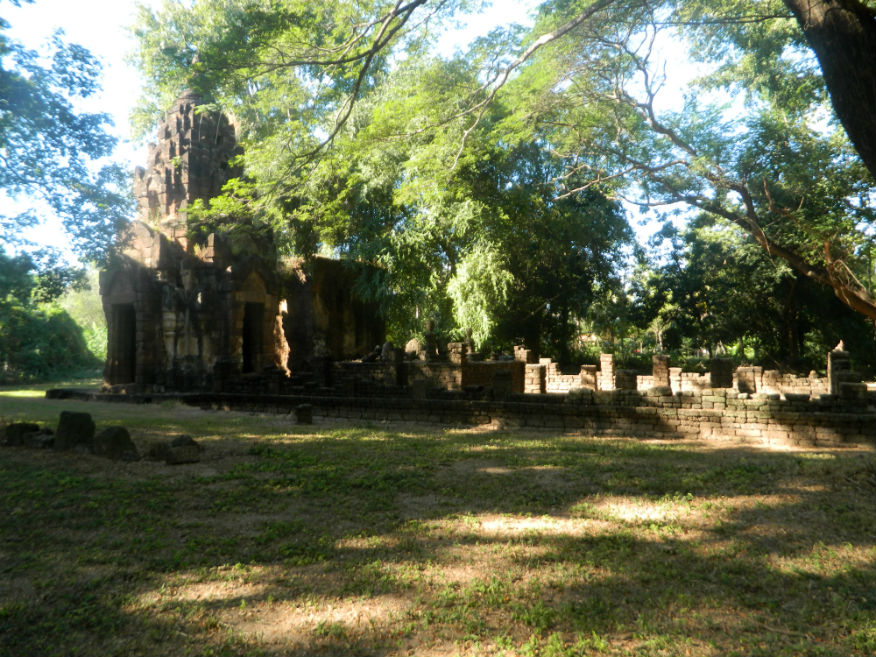
Wat Chao Chan

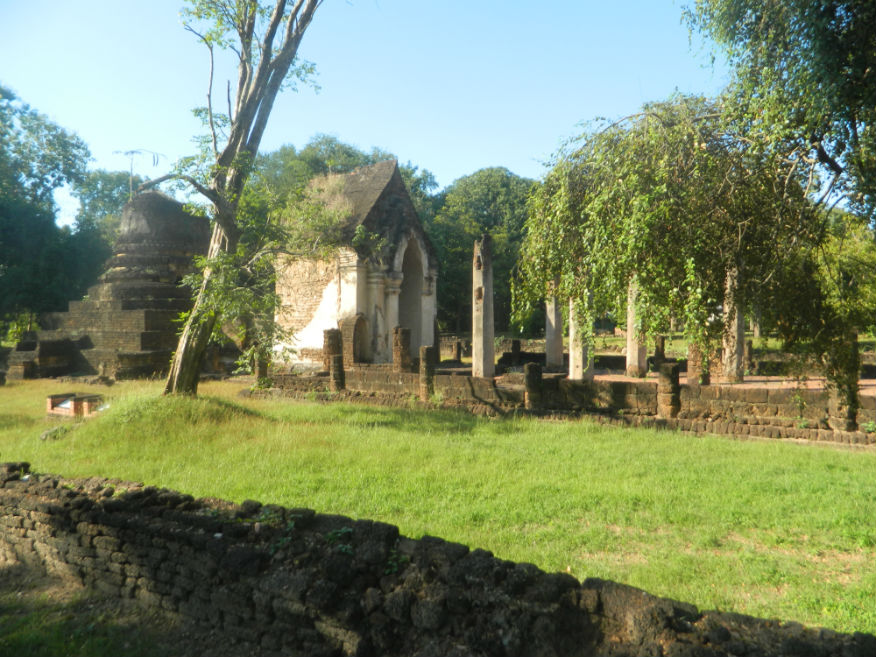

Wat Chom Chuen
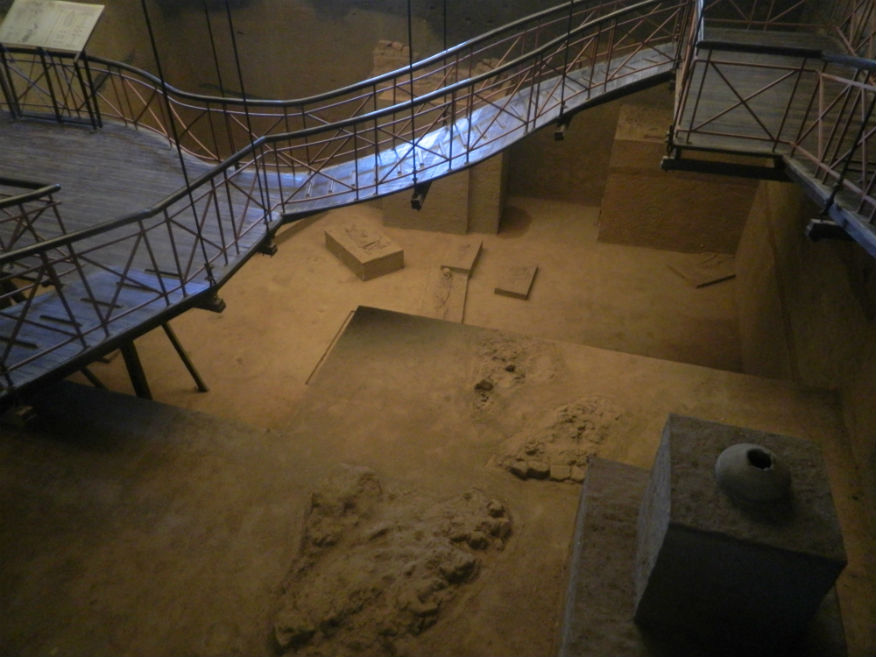


Wat Chom Chuen Archaeological Site Museum


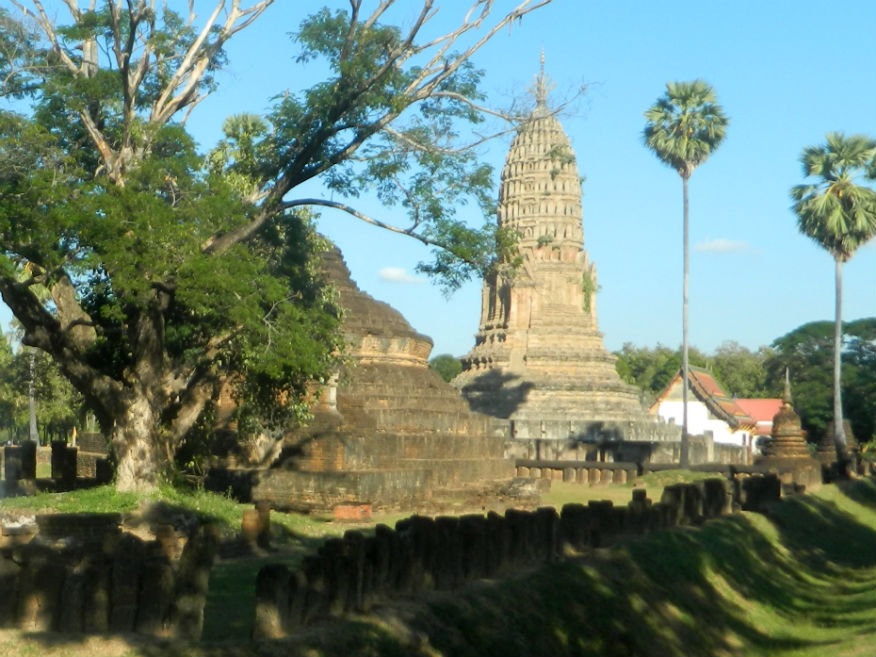


Yom River and Wat Phra Si Rattana Mahathat


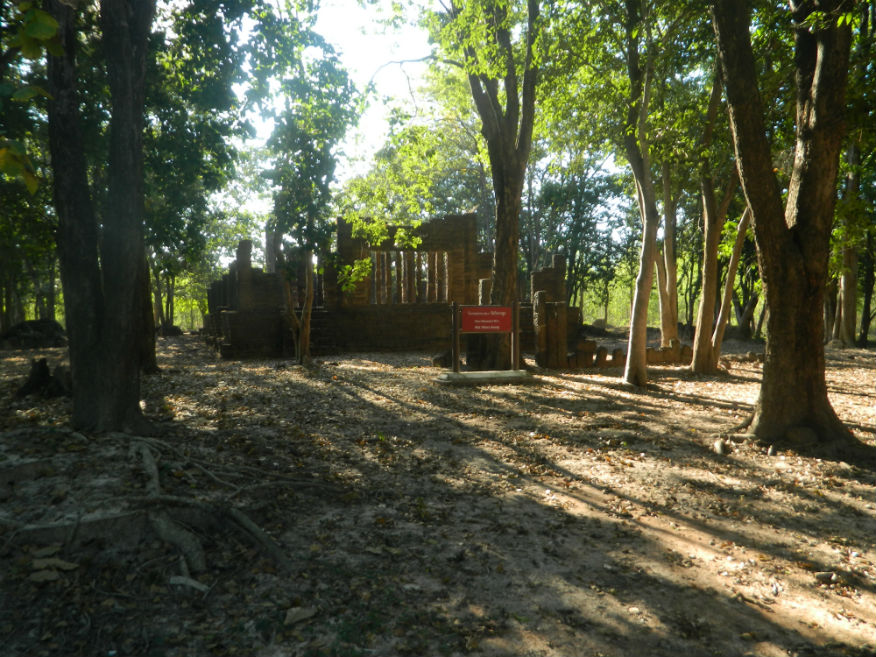
Monument w.5


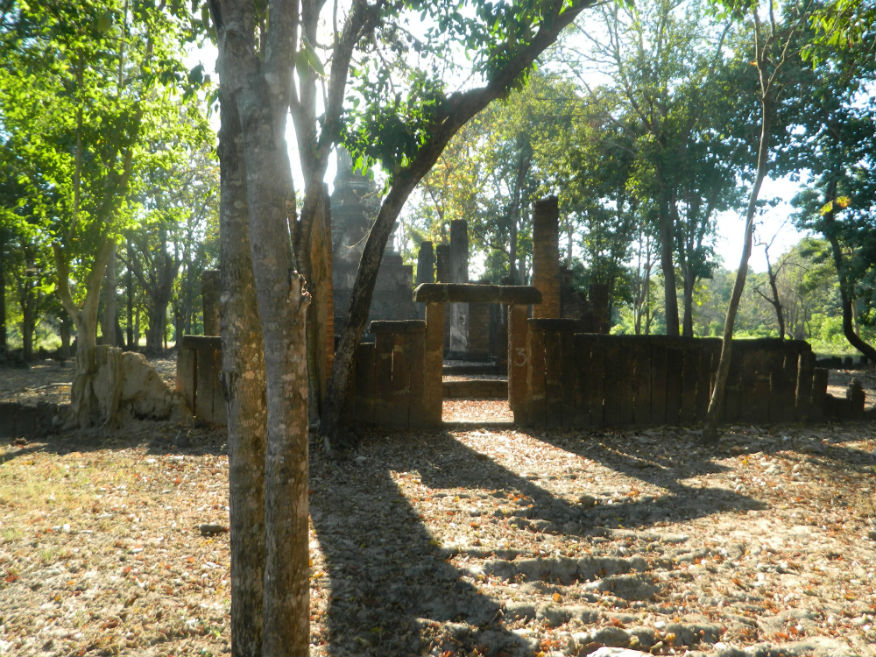
Monument w.4

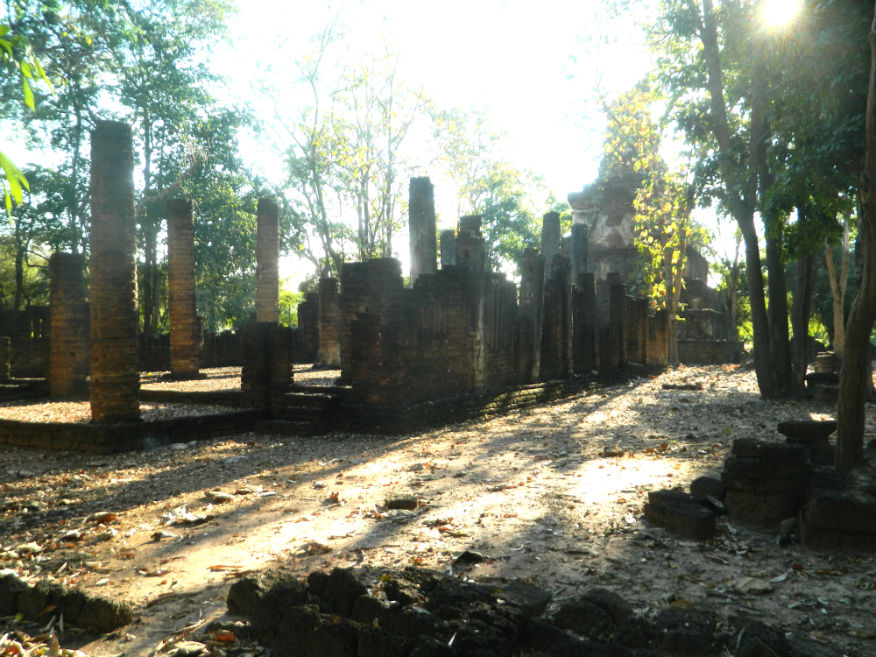

Wat Rahu

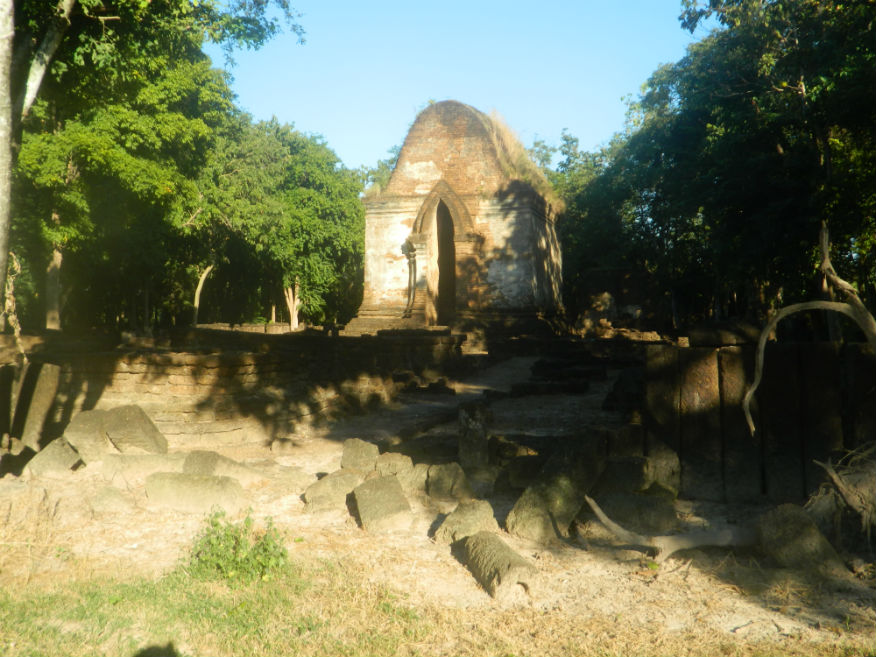

Wat Phaya Dam
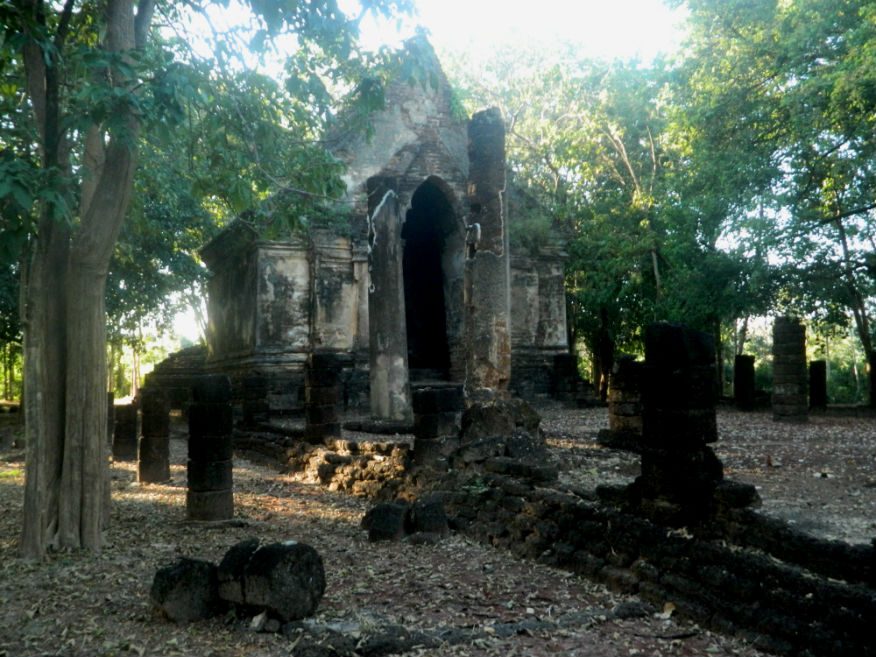


Wat Sa Pathum
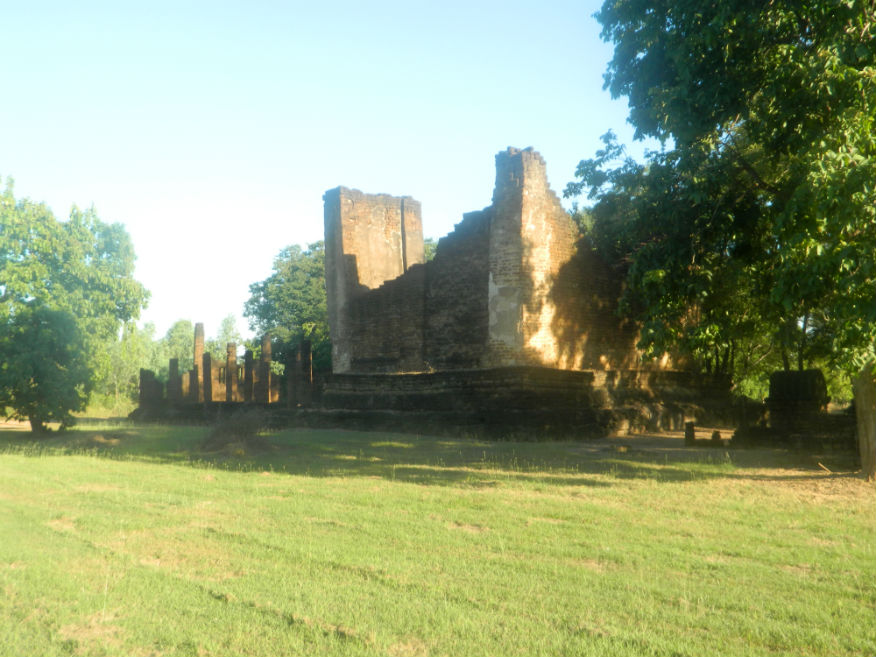


Wat Yai Ta
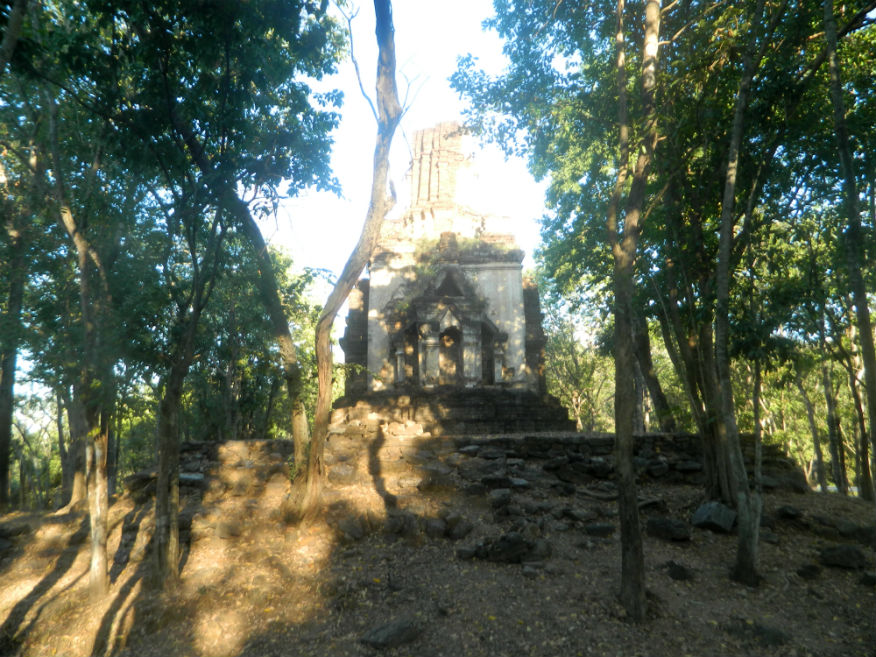

Wat Chedi Khao Yod
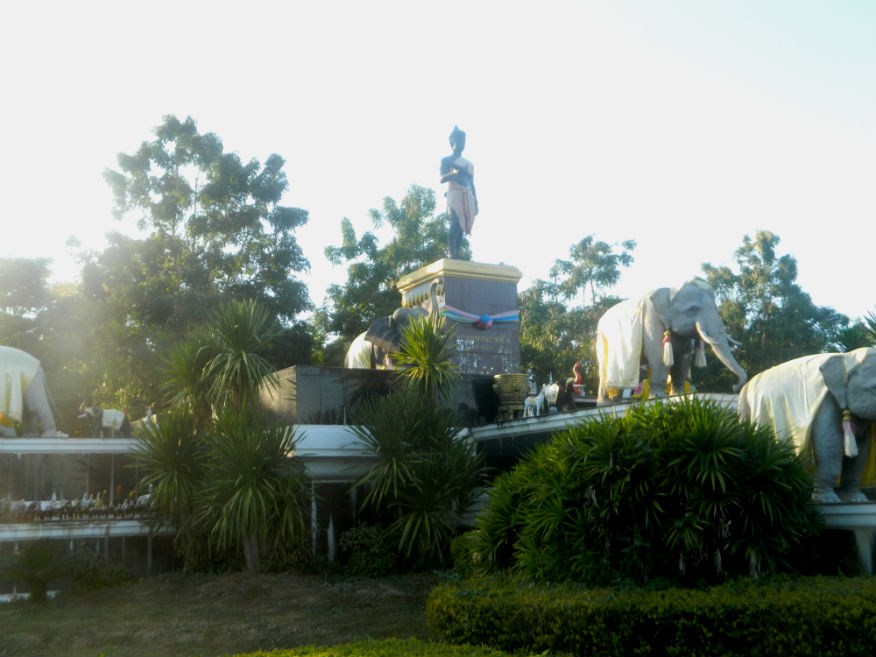
Phra Ya Lithai Monument