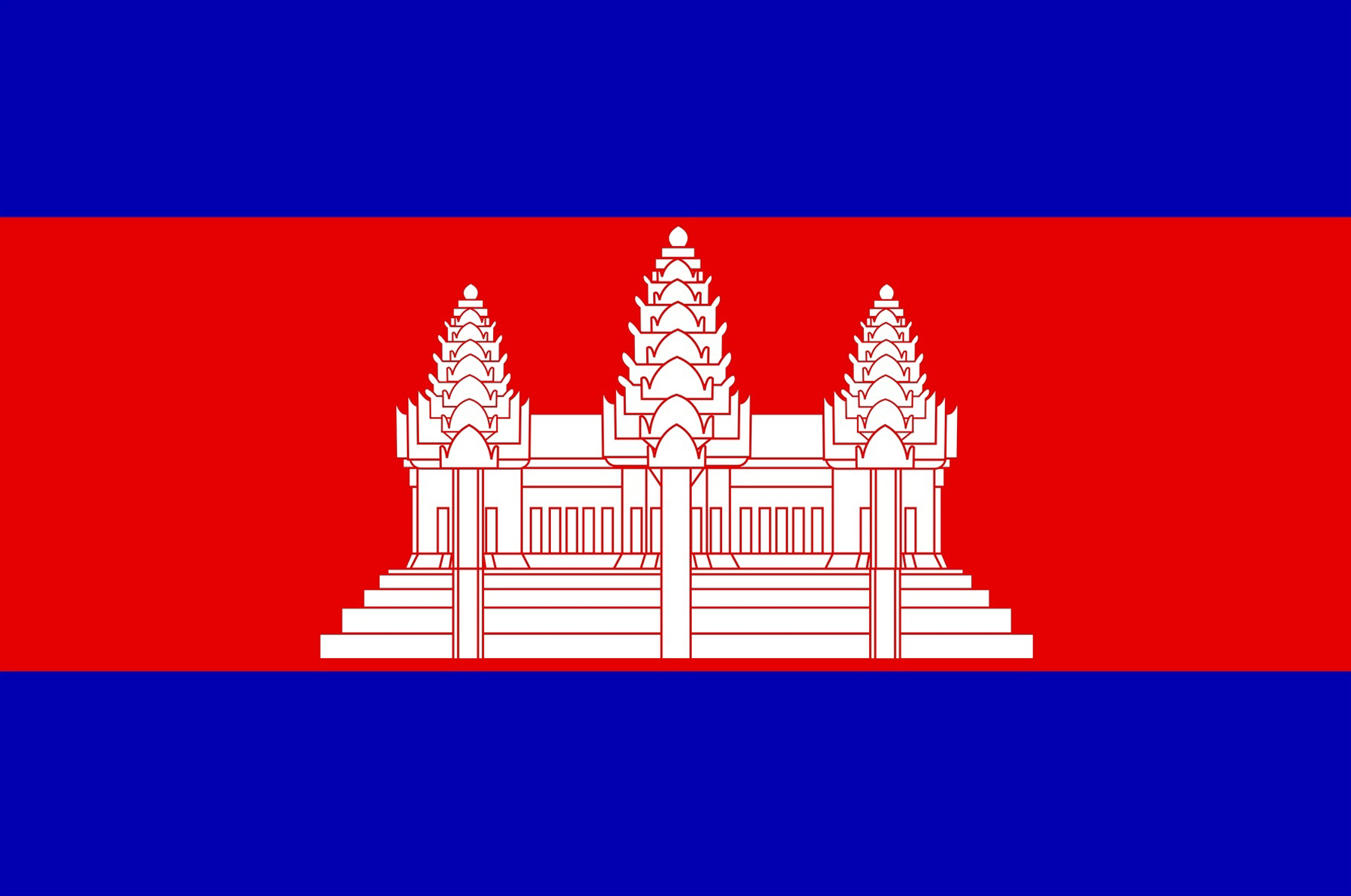
Cambodia, a new experience........Apart from using the border check-point at Aranyaprathet to extend my stay in Thailand on one occasion, I have never visited Cambodia before; certainly not to stay. My 30 days allowance for a stay in Thailand without a visa is about to expire so as part of my overall travel plan I will exit the country and spend around a week in Cambodia. My departure has been fixed for some while and more recently the first two nights in Phnom Penh. Thereafter I will decide where to stay as I go along dividing my time equally between the capital and Siem Reap to allow a visit to Angkor Wat. The overall tour will be for 7 days minimum depending on circumstances. The return to Thailand will be made overland.
Don Meuang........There are foxes, badgers and rabbits in a serene countryside setting in rural England. Nothing could be more peaceful! Then ‘puff’ the scene disappears as surely as clicking on the TV remote. The alarm just went off. It’s 3.45 am. I allow myself 1 hour to get ready. That includes coffee, croissants and jam. I order a taxi which arrives before 5 am and I’m away to Don Meuang International Airport. This airport was the original international airport before the new Suvarnabhumi Airport opened. Don Meuang became essentially the domestic airport. Then in autumn 2011 it was badly affected by the great flood and out of commission for 4 months. Air Asia moved its operations to Suvarnabhumi but returned to Don Meuang in the spring of 2012 after this airport was refurbished and put back into service. As Air Asia offers a short-haul service to major cities in south-east Asia, this has helped Don Meuang retain its status as an international airport.
I arrive in good time to find the airport quite busy but overall I'm generally impressed with what they’ve acheived here. The buildings look fresh and new albeit without the glamour of Suvarnabhumi. It was fifteen months ago that I viewed the runway from the elevated tollway to see it completely submerged in floodwater. I proceed through passport control and security checks. If I had left it one day longer there would have been an overstay fine.
Air Asia flight FD2772........The Air Asia flight is on time and the aircraft is airborne by 7 pm. From my window seat I note the aircraft heading west over the Chao Phraya River in the opposite direction to its destination. However it soon banks sharp left on a U-turn. Presumably it is avoiding the flight path into Suvarnabhumi Airport which is to the north. I manage to get a little sleep but in no time the aircraft is making its decent. Of course I am focused on the arrival in Phnom Penh as this is my first visit here. The land looks parched and dry and far less densely populated than in Thailand. From altitude the buildings look modern and fresh. It’s not surprising. Cambodia has had a new beginning.
Phnom Penh arrival........The small airport in the capital is a credit to the new Cambodia. As another new construction it looks clean and tidy and with relatively little traffic, progressing through passport control and customs is quick and efficient. Having obtained my e-visa in advance there is no need for me to queue as most of passengers requiring a visa head for the visa on arrival desk. I’m soon at the entrance. It’s here that a little homework pays off.
Cambodia’s currency is the riel but for any large purchases and as a substitute, the US dollar is widely used. In fact I obtain dollars from an ATM machine in the airport terminal. Just a tip I learnt though. It is better to withdraw on odd amount or you will be left holding big notes which may be hard to change. The riel is interchangeable with the dollar at 4,000/riel per dollar.
Secondly as I need transport into the city about 7 kilometres away, I learnt that the rate in the airport complex is $7-$10 dollars but by walking just 100 yards through the perimeter fence a tuk-tuk will take you in for just $5. I’m also impressed with the amount of English language spoken and it becomes no trouble to get the driver headed in the direction of my selected hotel. As the tuk-tuk heads into the city I have a chance to look around. Certainly near the airport it is not built up and the roads not too busy. That will change as the tuk-tuk nears the city. Certainly most of the buildings look modern, evidence of Cambodia’s rebuilding. Only in the city itself, is there evidence of former decay during the Pol Pot years. The driver stops to allow me to change my large dollar bills then proceeds into the city. I have been warned that many of these drivers are from rural areas and do not know the city that well. My driver does make one U-turn but I’m soon at Lucky Star Hotel in 336 Street.
Lucky Star Hotel........Lucky Star Hotel is one of the older hotels located in the business district. It does have all the usual amenities that I expect but as it turns out is not so convenient to for cafes, restaurants and tourist attractions so local transport will be required for these. I am however near the new City Shopping Mall and The Olympic Stadium (the stadium that never was). The reception staff are generally helpful but lack a certain charisma compared to the Thai equivalent. Arriving on an early flight, I am pleased to be able to check in at around 9 am. When I enquired about coffee or hot water for my flask, they are happy to fill the latter which enables me to add 3 in 1 coffee I brought from Thailand. When I enquire about the city's tourist attractions they help with this also. So far so good.
City Mall shopping centre........The City Mall is just 5 minutes away. The Lucky supermarket chain has opened a branch here and even replicates MacDonald’s with its burgers. Apart from a Chinese restaurant on the upper floor, however there is still little choice and certainly there is retail space still available. Something for the future I guess. Wandering around the supermarket I see so much imported goods from all over south-east Asia and China but, as you would expect, more expensive and priced only in US dollars. The wine is about the same price as the UK but the spirits and beer much cheaper. I head back to Lucky Star Hotel not wishing for further activity at present. It’s quite hot today.
Getting my bearings........As with any new location it is necessary to achieve some manner of orientation from where you are staying. Obtaining a street map is a good start. From here you can plan your trips within a given timeframe. From Lucky Star Hotel it is a good 15 minutes by tuk-tuk to the riverside known as Sisowath Quay. It is near the river bank that most of Phnom Penh’s important buildings are situated including the royal palace. But I head for Sisowath Quay really just as an exploratory visit knowing that in the evening the quayside is an excellent venue for just relaxing and taking diner at the many and varied restaurants along its length. I take a tuk-tuk downtown surprised that the owner has excellent Thai but his English not so. By the end of the journey I have arranged with him an important excursion for tomorrow. But first some diner or so I thought. As I come to pay him I realize I left my currency in the room. I took it out of the wallet really to work out what I have, remembering that I’m working in two currencies, dollars and riel. Well I find an ATM but it’s not working. The second one wants to charge me $5 for a cash withdrawal. In the end I realise I have hidden away UK pounds and Thai baht in my wallet. Working with four currencies no wonder I’m confused. A money changer takes a liking to Thai baht rather than UK pounds and I just have enough to pay the tuk-tuk driver, pay for lunch and transport back to Lucky Star. There’s no shortage of choice where to eat but I settle on a restaurant and order chicken curry and spring rolls. They ask me whether I would like noodles or bread with my curry. I order bread knowing full well I don’t ever remember eating bread with curry but as in Laos and Vietnam the French have left a legacy in the form of the humble baguette. All in all it was very reasonable considering I had a beer and they added a fruit dessert for free.
I head back through the mad evening traffic wondering what the French would have thought would happen to their beautifully designed boulevards in years to come. Yes it is chaotic with motorbikes swarming in most suicidal fashion but I feel a lot of the problem is due to lack of adequate traffic control systems. A glass of wine and an early night is what I need now.
Wednesday 20th February
Lost identity........After a good nights’ sleep, I again obtain some hot water for coffee. Yesterday while travelling around Phnom Penh’s city streets I looked for evidence of this city’s troubled past. Perhaps significant in itself is the fact that I couldn’t see any. Most of the buildings are new. There is little that I can see that predates 1979, ending a period of colonial rule, the effects of the Vietnam War and the genocide under Pol Pot. What is still noticeable to the visitor is a lack of transport policy, traffic control and road maintenance but that is not unique in south-east Asia. Policing of this chaos is, however, evident. However private enterprise takes over, usually to good effect. As I take diner on Sisowath Quay another thing becomes apparent: This is a cosmopolitan city. The authorities here have actively encouraged foreign investment which has attracted immigrants from China, India, USA, Europe, Australia and from other Asian countries. This is probably good for Cambodia in the future but unlike many of its neighbours its cultural identity is far from evident. The physical evidence of Cambodia’s troubled past is hard to find. The psychological evidence is even harder to decipher as people diligently carry on with their daily lives. Perhaps today some of the evidence will present itself.
Genocide........My transport is waiting for me outside the hotel; it’s not yet 10 am. Within the city limits there are a number of tourist sites I would like to visit but only one is on my list for today. Added to this is a further site some 17 kilometres south-west of the city which linked to the former relates to one of the most tragic events in Cambodia’s history if not of the recent history of the whole world. In the southern suburbs of Phnom Penh lies the former Tuol Sleng primary school and the Toul Svay Prey high school which in 1975 was to become Office 21 (known as S-21), designed for the detention, interrogation and inhuman torture of detainees. However Toul Sleng was not used for mass murder. After confession, detainees were moved to a more discrete location away from the city, known as Choeung Ek now known as the Killing Fields.
I had already decided to concentrate my efforts today on just these two locations. I figured that this would be enough for one day with the risk of an emotional hangover which I last experienced at Auschwitz some years ago. However what has happened here occurred in my lifetime and in the lifetime of Cambodians in my age group. Even more shocking was the fact that my country did nothing and even recognised and supported the regime that caused this. But to be fair, with borders closed and mined, no access was possible and Cambodia’s only allies were Vietnam and Soviet Russia. The consequences of war can have catastrophic side effects.
I expend a good four hours between the two centres initially without emotion but as I view and read about the exhibits at Toul Sleng and move on to Choeung Ek where the stupa houses countless human skulls and other remains the sheer tragedy of all this begins to sink in. It is certainly not for the squeamish! As I proceed through the Killing Fields at Choeung Ek I wonder how I should present this on my website. I can only summarise it at best and refer to the mass of published material that now exists which endeavours to explain what happened here. I think it best I present my material in photographic form with simple captions. These will appear in due course. My material concentrates on the two site I visited but from the museums and other sources it is easy to establish the situation nationally in the period leading up to and during the terror years between 1975 and 1979.
I return to Lucky Star Hotel in mid afternoon. It’s been a hot day again and I only need a filled roll and a beer right now. I spend a while just reflecting on the day’s events and work on my notes. For dinner I wander across the road noting festivities under way in the hotel opposite. There is a lavish wedding taking place a sign that some prosperity at least has returned together with broad smiles in stark contrast to what I have witnessed today. I take dinner nearby. I’m happy with my portion, pork and green peppers with rice. Soup and a green banana are included in the price. That should do it for today as I spend another hour on my notes not bothering about the Champions League game going on in the background.
Thursday, 21st February
Uncomfortable……..I’m still not entirely comfortable using Lucky Star Hotel as a base. I booked it online for 2 nights principally to keep within my budget but in a strange country I’d rather be nearer the tourist hotels. This morning I consider this option but as I only plan to stay here one more night it’s hardly worth it, stretching my budget further. I’m happy to venture into the street and pick up a filled roll and coffee.
City Tour……..My driver is waiting at 9.30 am. I head back towards the river, first to the Royal Palace. Around the Palace are wide boulevards closed to traffic offering me a chance to take photographs unhindered. The classical architecture is certainly fitting for king looking pristine and new. Although I’ve build the entry fee into my budget for the day I question whether it’s really necessary for me go inside. I note that only part of the grounds is accessible and while the Palace is undoubtedly of Royal significance I'm not sure about the historic value. As I approach the building marked ‘ticket office’ all I can see is a dark glassed window with a hole in it perhaps more suitable for pigeons. I glance around but am ushered forward. Yes this is the right place. I peer into the gloom inside the pigeon hole. Yes there is a figure in there but no eye contact. It remains motionless as if just imported from Madame Tussauds. I push a dollar bill through the pigeon hole and it comes straight back out again. It’s like I’ve woken a sleeping giant. The matronly figure will only accept the correct money: Unbelievable for a site as important as this. The outcome is quite predictable. I make my way to the exit.
Before I move on there are a couple of chores I need to do. Firstly I need to stock up with dollars at an ATM but more importantly I need to book a bus ticket for tomorrow. That’s arranged quite efficiently at one of the many shops along Sisowath Quay. I get change for my dollar bill too!
That job completed, I wander back towards the Palace area. Nearby with all the splendor one would expect of a Royal building, the newly constructed King Sihanouk Memorial is a reminder of the recent passing of this great leader who meant so much to Cambodian people during such harrowing times. It is just about 2 weeks since his remains were transferred to the Royal Palace.
My driver seems eager to move on to another site bypassing an important one on my list but I soon have him doing a U-turn. On reflection I should have just let him drop me here. I could have made my way around on foot. This is a popular tourist area and the police are keen to enforce the no waiting restrictions in the area. Why don’t they arrange buses for tourists? But my next stop more than makes up for the last. I’m soon outside the National Museum of Cambodia. This museum is laid out chronologically in a similar way to the National Museum in Kamphaeng Phet that I visited not long ago. It starts with pre-history and runs through the various classified periods up to the modern day. Of course artifacts from the Angkor period dominate but of more surprise to me are the objects found recently that pre-date Angkor i.e. before 6th Century. These objects reveal the presence of an advanced culture dating back over 2,000 years. Excavation of important sites in the last few years and still ongoing has dramatically increased the knowledge base about a civilization the nation knew practically nothing about. Thanks to a period of stability in the much-troubled Cambodia, great strides have now been made with international co-operation and training. I spend an hour here but I could easily have doubled that. It’s time for lunch nearby.
There are a number of other venues I could add to my list but these are more for shopaholics. The only other one of any historical significance is next on my list. It is a temple on a small mound in the city, known as Wat Phnom. On the face of it, it is not unlike many of the temples I visited in Thailand with a chedi and a viharn surrounded with smaller chedis. The site is small and visually unremarkable. As I wander around I wonder why it even figures on the list off attractions at all. Certainly there is a wealth of priceless Buddha images located in the viharn, many more than you would expect at a site like this. The temple buildings themselves look austere. They don’t even look old. As I exist via another gate I stop to read the sign board thankfully also written in English. This puts a completely new complexion on what I’ve just seen. This is truly a sacred place dating back some 700 years to the very foundation of Phnom Penh itself. This insignificant temple mound is the very heart and soul of Phnom Penh. It is proof that Cambodian culture and beliefs are not dead. It’s the very thing I’ve been looking for. So why you might ask is it not lavishly decorated with gold and silver and all that glitters as are the temples for example in Thailand? The answer is simple. It was smashed to pieces by Pol Pot’s regime.
Before I head back to Lucky Star Hotel there is one more thing I wish to do. As I look around me I see majestic ministerial buildings, banks, top class hotels and wide boulevards the sign of wealth and prosperity. Yet hidden in side streets are shanty towns that houses those not so fortunate. It’s clear that new wealth is being created here but has yet to permeate down to the lower levels of society.
My final stop is not on the tourist map, well not yet anyway. Over the last couple of years I’ve read of a project to re-instate Cambodia’s railway network. This is by way of Australian investment. An initial target date for the opening of a number of lines out of Phnom Penh was 2013. I now head for Phnom Penh railway station to establish what is happening. My driver is somewhat amused when I mention this destination and he is entitled to be. The answer is nothing. The whole complex is closed and guarded. There are some liquid container wagons which confirm what I’ve read that there is some traffic between Phnom Penh and Sihanoukville on Cambodia’s south coast. It’s seems essential that this important piece of infrastructure is in place in order for Cambodia to continue its recovery. Of course I would also welcome the opening of the line for passenger trains from Phnom Penh all the way to the Thai border. As I leave the station it is not totally deserted. The station forecourt is used as a parking lot for tuk-tuks. While I’m a little disappointed I’m glad I came here because reading about something is not the same as actually being there.
Making plans……..I head back to Lucky Star Hotel and bid farewell to my driver and guide. He has generally offered good and patient service and I know with my support a small amount of wealth will have filtered down to base levels of society. It’s still only 2pm. I can take a break but first I need to reinforce my plans for tomorrow. The bus to Siem Reap has already been arranged. They will pick me up from the hotel too. For my stay in Siem Reap I have emailed ahead. I have now received a reply confirming my reservation. I have also sent through transport details and I’m pleased to know I will be collected from the bus station. How efficient is that?
Before dark I can add one more attraction to my list. It is within walking distance from the hotel. The Olympic Stadium was built in 1966 for an event which never happened but today it is the focal point for residents of Phnom Penh to come and exercise in whatever way they choose. Simply walking around the track, taking part in an aerobics class or playing football in the yard is free for the moment at least. Behind the stadium a large development project is under way seemingly another shopping complex. Outside the stadium I notice a signboard that advertises a Cambodian football league for 2013. Wonderful! I now spend a good hour wandering around but finally arrive back at the restaurant I used last night. It’s the only one I can find that has a menu in English.
Friday 22nd February
Capitol Tour……..Last night on the way back from the Olympic Stadium I wandered past a bakery that I thought I’d visit this morning. This will do for breakfast today but it’s also a good idea to obtain something for the long travel to Siem Reap. I settle up with Lucky Star Hotel and wait for my transport. A minivan arrives at 9.40 am and whisks me away to the bus departure point. I just know this isn’t going to be a bus station as I would normally think of one. Spot on! The Capitol Tour office is located on a street corner. Three buses are parked waiting departure, one on the main street, two up the side. It’s a chaotic scene as ordinary traffic tries to maneuver around these obstacles. None of these buses are mine. But the one on the main street soon pulls away heading for Poi Pet while my bus nudges in behind. I clamber aboard. It’s a standard seater air-conditioned bus but hardly state of the art. To survive the 7-hour journey I wish for a comfortable seat but end up in a seat over the front wheels of the bus offering less legroom. Well what do you expect for $7? This is not Air Asia now.
The Capitol Tour bus departs at 10.20 am. It takes a good 30 minutes to reach the suburbs of Phnom Penh. The distance to Siem Riap is 314 kilometres. It’s going to be a long day. I read that the road now is quite good but as the bus reaches open road I wonder by what standards this is compared. The road is narrow with no verge or slipway for slow moving traffic to pull over. Progress is agonizingly slow. On top of that the terrain is parched dry and flat as far as the eye can see. There’s obviously been no rain for months.
This is destined to be one of the most boring trips I’ve ever made, accentuated by the constant presence of litter casually thrown from passing vehicles. In the towns and villages it is even worse with a total lack of waste management as litter accumulates in bore holes and drainage ditches.
Rural Cambodia consists mainly of stilt houses. Originally the posts were made of wood but today they are mostly concrete. Nevertheless most of the upper structure consists of wooden boards. The roof is either thatch or corrugated tin. Some of the more fortunate have tiled roves while if the ground is suitably raised the base can be enclosed with walls of brick and render. Only the well-off can afford to bring in soil and stone to raise the land over seasonal flood level to build brick and cement structures. These are often brightly painted with additional décor that makes them stand out from everything else. But everywhere there is bare earth, dust and detritus from everyday living. I try to get some sleep. At least it’s not so hot, click for Page 2.